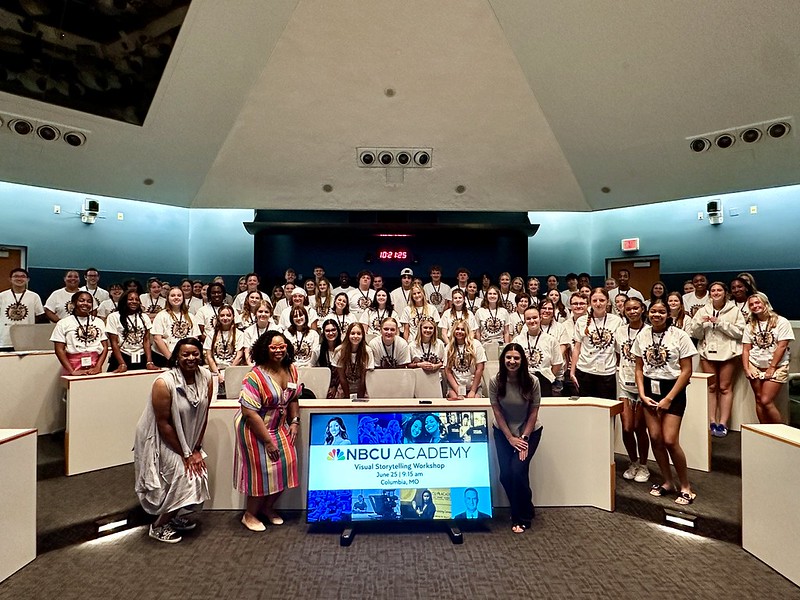
Celebrating America’s 250th Anniversary
The 2026 Summer cohort of Mizzou’s High School Journalism Workshop produced a collection of articles, videos, and photographs exploring how Columbia residents view and experience the celebration of America’s 250th anniversary. Through interviews, storytelling, and visual journalism, students captured diverse perspectives on the significance of this historic milestone, connecting national history with the personal experiences, memories, and hopes of people in their local community.
Coach Wale Aliyu
Elsa Flores – St. Louis, MO & Sophia Strong – Shorewood, IL
Decades after its creation, Americans proclaimed their nation as a “melting pot”: a unified country that combined identities and customs into one unique culture. As the United States approaches its semiquincentennial, students and professionals at the University of Missouri (Mizzou) reflect on whether or not this title captures what American culture is made of. Due to the upcoming anniversary of the United States, University of Missouri history professor Jay Sexton is bringing attention to the idea that the melting pot title might have been used for different intentions than what was immediately assumed.
“I’m not a huge fan of that interpretation,” Sexton said. “The idea that America’s a melting pot, and that the people who advocated [for] that did so on the grounds that they wanted to take immigrants, black people and Indians and smoosh them in and say, ’oh, we’re all melting into one’, when really, what they meant was ‘you’re all gonna be like us,'” Sexton said.
To counter the idea of America consisting of one blended soup made up of different herbs, spices, and broth, Professor Sexton argues that the United States culture is more similar to a salad bowl.
“[America] doesn’t melt into a soup; there’s different parts, but taken together they’re all part of the same dish, the same thing, but they retain their individual autonomy and diversity,” Sexton said.
The differentiating factor between characterizing the United States as a melting pot or a salad bowl is whether the people fuse their customs to become one warm and smooth pot of soup, or keep their personal cultures close, to make a bowl where vegetables, crunchy lettuce, and cheese work together to make a refreshing salad.
Mizzou student Ian Dowda believes that in the case of the United States, the lines are blurred.
“I like the idea of America as a melting pot, but there are definitely some salad bars across the country,” Dowda said. “There are lots of places that are very opportune for other people, so you can bring your culture and be a melting pot in a different location.”
As an immigrant from Ethiopia, Abel Brahne, a Mizzou incoming junior, experienced finding his place at the dinner table in a different way. For Brahne, community came from the people most similar to his situation.
“I get involved in clubs involving Mizzou East Africans,” Brahne said. “Most East Africans go there. We do networking and talk to different people from different majors, or older [students about] how to get an internship.”
Brahne has lived in Columbia since high school; for him, campus organizations exposed him to different flavors and spreads that have shaped his time at Mizzou. These on-campus experiences changed his perspective on community and have encouraged him to venture out from his typical palate.
“Most of the people [in East African’s club] are from one country,” Brahne said. “But if you join different clubs, …. there’s more kind[s] of people involved.”
When categorizing the culture of the United States, Sexton believes it is necessary to look beyond the hue of the bowl and into the folds of the bite, in order to differentiate the people from a coexisting bowl of leafy greens and pot of America soup.
“It’s not just racial, there’s [been] a lot of talk in recent years about intellectual or ideological diversity. There’s students who are conservative as well as left-wing students, and they might have the same skin color, but they certainly look at the world very differently.”
While Sexton believes that the ideological differences of American people provide evidence of America as a bowl of Caesar or Greek, Russian international student Daria Bykovskia took the unified social structures of the Mizzou community as proof of America as a bowl of Borscht, an Eastern European delicacy.
“It’s a cultural shock [that] you get your first days here,” Bykovskia said. “Adjusting to a new mentality, a new social context and learning to navigate around it, and learning new social cues, it’s like starting over and learning to interact with society again.”
In distinction to the social structure of her university, Bykovskia recognizes that different customs can coexist within one community to form its identity.
“All those different mindsets living in one place can sometimes create conflicts and separation. In my eyes, [America] is divided into smaller or bigger communities, and they might be a bit separated from one another to a certain degree, but overall they create the country that the U.S. is today.”
Although the community at Mizzou may feel that the United States is unique because of the presence of individuals, the commonality among opinions is that the characterization of America as a pot of creamy soup or a bowl of crackly salad is, at the end of the day, subjective. “Maybe a charcuterie board?” Mizzou student Damian Maynard said.
Coach Carolina Astrain
Valerie Sepulveda – Peñitas, Texas; Nathan Clouse, Houston, Texas; Ayrton Geiger – O’Fallon, IllinoisValerie Sepulveda – Peñitas, Texas; Nathan Clouse, Houston, Texas; Ayrton Geiger – O’Fallon, Illinois
Every one in seven people are impacted by food insecurity. The Food Bank of Central and Northeast Missouri works with volunteers and other food pantries to serve those in need.
Katie Adkins, a spokesperson for the food bank, explains how the organization repackages food to give to those who truly need it. “We all understand what a difference not having dinner would make in our day,” Adkins said.
With the food bank’s 45th anniversary approaching, they hope to meet an important volunteer goal.
The challenge is simple: They’re asking volunteers to donate 45 hours of their time before September 10.
Campus visitors Melissa and Camryn Guevara said that, “helping out food banks is important for helping out the community.”
They also said if people can’t donate food then people should try to donate their money or time.
Food insecurities are felt across the country.
The Food Bank of Central and Northeast Missouri is just one of the thousands of food banks advocating for a change.
In 2025, volunteers helped deliver 21 million meals though over 76,000 hours served.
Although this is not enough of an impact to fix the crisis, the food bank supports thousands across Missouri.
The organization follows an ideal that Adkins shared, “Food is universal, it’s something we all need.”
Coach Tony Balandran
Writers: Phoebe Fuerst – Memphis, TN; Julian Wilson, Clayton, MO; Mari Kradjian – San Diego, CA
Video By: Kylie Zavodny, Blue Springs, MO
A suitcase or less, a culture left behind, a family waiting in the United States — this is the story of thousands of immigrants from across the world finding refuge in the U.S.; some of those seeking the American dream.
The fulfillment of the subjective, and sometimes elusive, American dream can vary drastically for these immigrants. Even when success materializes, there are countless challenges that people might face on the way. At the dawn of America’s 250th birthday, immigrant-owned businesses in Columbia showcase success stories that have become a part of local culture.
Raw Roots Turmeric
When Ranjan Hans immigrated to America from India more than 20 years ago, the American dream meant supporting her husband’s career and building a stable life for their new family.
Hans said her husband came to the United States to continue his scientific fellowship, while she focused on raising their two children in a foreign country.
“I was just doing the things that I thought needed to be done at that time,” Hans said. “My whole focus was to let him focus on his career. Let me focus on raising the kids.”
Hans said moving to America was a slow process. The culture shock involved not knowing the language and not having her traditional foods, changes that were difficult to get accustomed to. She said watching the Weather Channel every day helped her eventually understand the American accent.
However, as Hans settled into life in Missouri, her idea of the American dream began to change. Instead of having to focus on survival and building life in America, Hans got more time to bring a piece of her homeland to her new country. She and her husband realized they could not find the same fresh, medicinal herbs that were rooted in their daily life in India.
“We were looking for that particular taste, that particular pureness, that particular rawness, which was hard to find,” Hans said.
Rather than accepting that loss, Hans and her husband began growing the herbs themselves as they valued letting “other people … taste it and have a firsthand experience of all these herbs.” Their dream of bringing a piece of their home to America eventually became Raw Roots Turmeric, a Columbian farm specializing in fresh turmeric, shwagandha, moringa, neem, ginger, and other Ayurvedic herbs. Their business was among several represented at a recent Columbia Farmers Market.
“Many, many people are looking for a holistic way or natural way to heal their body,” Hans said. “So … that’s how we started (Raw Roots Tumeric) when COVID happened in 2020.”
When Hans came to America, her dream involved supporting her husband’s career and wanting a better life. Today, however, that dream has shifted with Hans believing that the American dream is about turning an idea into something that benefits others and bringing traditions from India.
“See, (the) American dream is something when people think of something, create an idea, and make it into reality. And many … can just trust that brand. I think that’s the dream of any business or American dream, right?” Hans said. “Raw Roots Turmeric is all about creating scientific-based products, and so that people can really use it and find it really, really helpful. It’s not just a business (for business sake).”
Myanmar Kitchen
Columbia’s Myanmar Kitchen, 1301 Vandiver Drive, Ste J, was established by Saw Saw Aate and her family, who have carried their Burmese culture into the Columbian scene. Amidst a resurgence of the long-lasting Myanmar Civil War, the nation is in turmoil as a result of the current conflict between the now-ruling military junta and the National Unity Government (NUG) and its official armed division, the People’s Defense Force (PDF). The junta took power after a military coup in 2021 and now garners support from nations such as Russia and China, while the NUG and PDF consist of pro-democracy rebels, according to The Global Conflict Tracker.
As a result of the conflict, Aate fled Myanmar and came to Columbia, where she opened her restaurant in 2024, one of the only kitchens of its kind, as “some (American) states have Burmese food, but Columbia doesn’t,” Aate said.
“Sometimes we miss our country, our food, so we work until very tired, and we want to eat our food easily … I like the cooking, and some of my friends want to eat, too,” Aate said.
As the largest group of refugees in Columbia, the city’s Burmese population has woven its own tightly-knit community quilt. Aate said she found support in the company of her family and friends as she was establishing her restaurant.
“We don’t have an education here, so everything is very, very hard for me … and my sister, some of my friends helped, and we built this restaurant,” Aate said.
Aate said she continues to find comfort in the companionship of her family, as she operates her restaurant with the help of her husband, Joseph Mangsen, and her sons, Kap Tuang, 11, and Chung Mung, 9.
With support of the Burmese community behind her, Aate delivers Burmese culture to many Americans in Columbia. They make up “most of my customers … so more people taste my food … I’m proud,” Aate said.
Regarding her home country of Myanmar, Aate said, “I’m sad for my country, my parents, my mom, my dad and some of my sisters … It’s so bad.”
Without losing sight of her love for her culture, Aate said she is content with the work she has done and the cultural space she has cultivated, “Yes, I’m happy.”
G&D Steakhouse
G&D Steakhouse is a family-owned restaurant whose current location, 2001 W. Worley St., opened in 1970. The business is based on a culture of family connection and love for all of their customers. Four generations of the Aslanidis family, who immigrated from Greece, have worked at the store, from the original founders – Dino, Gus and George, the namesake of the steakhouse – to the current owners, their children and grandchildren.
“It’s such a blessing that I get to work with my kids and my mother-in-law, my father-in-law,” Kalene Aslanidis said. “If we weren’t working together, we wouldn’t be as close as we are. For 28 years, we’ve worked, I mean, most (days) together.”
Aslanidis started working for G&D Steakhouse at 15, and four years later, she began dating Micheal Aslanidis, who is a part of the third generation of the steakhouse legacy. They eventually married and had two children who now work at the restaurant. Whether it was customers witnessing her earn a degree at the University of Missouri, to the baby blankets that regulars made for her when she was pregnant, to the birthdays, Mother’s Days and everything in between, Kalene Aslanidis has shared her life with customers in her 28 years of experience at the restaurant. The regulars that eat at the restaurant have become family in many ways to those who work there because of the connections made with every loyal customer.
“We’ve got a really special thing in Columbia with so many people that have just come in and their kids come in and their grandkids come in. And … there’s so many people that I remember like they’ll bring their babies here to eat before they even go home from the hospital,” Aslanidis said. “And so I see these babies that are now in college that (I) saw when they were two days old, three days old.”
The now-success of G&D Steakhouse was not without its ups and down, however. Along with the typical challenges of owning a business (long hours, finding a building, gaining a customer base), immigrating to America from small villages in Greece posed more problems.
Current owner Elly Aslanidis came with little money and virtually no knowledge of the English language, learning almost the entirety of what she knows from her customers rather than any traditional schooling.
Early on, Aslanidis worked about 78 hours a week, leaning on her family, who worked with her for support. She was originally on track to America to follow her father, Gus, and her uncle — both of whom wanted to make a better life for themselves than what Greece had the capacity to offer them.
Kalene Aslanidis said, “When grandpa Gus passed away, I just remember thinking what a good life he’s lived because he came, literally, he made such a gamble. He sold everything he had. He had (nothing), there was no going back to Greece … they had literally dollars in their pocket. But when he passed away, he got to see all four of his kids be successful, all of his grandkids to be grown and to be successful. And to get to see his great-grandkids be born here … and so I’m like (you know) what? That’s the American dream.”
Coach Amos Bridges
By: Gabriella Griffin – Carmel, Indiana; Charlotte Ely – Eureka, MO; Parker Billingham – Wentzville, MO; Sadie Kelley – Salt Lake City, Utah
Coach Pete Grigsby
By: Anna Gardner, Grapevine, TX; Kylie Dahlquist, Blue Springs, MO; Jonathan Lanier, Chicago, IL
July 4 marks the 250th anniversary of the United States of America. This date brings Americans from all parts of the US together to celebrate the pursuit of freedom and prosperity. For many Americans, this is also a time to reflect on the United States growth in the face of challenges, both world-wide and within its borders. This choice to persevere is a part of many of its people’s stories.
Immigrants coming to America have reflected this choice consistently. As countless numbers leave behind a life without opportunity and safety, they come to America seeking the values that have defined its history. As a testament to this strength, the Statue of Liberty held her torch of freedom over the many immigrants sailing into New York Harbor. The poem at her base represented the world they came for. In this poem, The New Colossus, Emma Larazus writes, “Give me your tired, your poor, Your huddled masses yearning to breathe free…”
With recent changes to the federal government’s policy on immigration and its enforcement of deportation, it has become more difficult for immigrants to enter the country and build a life of stability. But even with these changes, there remain many organizations that can help provide support. Many of these organizations are based in local communities, where they can take a direct approach in helping those coming to the area. One of these organizations is City of Refuge. This non-profit organization, based in Columbia, gives immigrants direct support based on “…relational care, education, and development,” Garret Rucinski, Director of Engagement at City of Refuge, stated in an interview. “Those are kind of our three pillars.”
There are a variety of programs for each of these ‘pillars’, several of which Rucinski was more than willing to explain. “Yeah, we have over 300 weekly volunteers now.” One of the things that City Of Refuge relies on is the work of volunteers and interns. Rucinski explained that with the help of these individuals, many from diverse backgrounds including retirees and professors, they can work on a variety of projects tackling frequent challenges. They work with fundraising, community outreach, education, and basic needs. Within this work, many of the volunteers form relationships with those receiving support from the projects. These connections provide support and stability beyond the projects’ reach, and after the immigrants find a foothold in the community, provides someone to reach out to.
Home of Refuge provides other support as well.
They offer a driving program, English classes, and legal advice. Rucinski stated the organization also has an artisans studio, which allows immigrants to learn to make art which can be sold in the Boutique that Home of Refuge runs. He talked about a section of the store labeled the Global Artisans. “The Global Artisans are over 10 of our different refugees, mostly women, who have started their own businesses in their homes.” He explained they create jewelry, purses, and many other designs. “Those proceeds go 100% to our refugee friends…” He added.
With every one of the projects and with all the support they give, the main goal of the organization has always been to help the immigrants get to the point of stability where they can thrive. As Rucinski states, “The goal is to move them from safe to stable, but then stable to thriving. So we want everybody to thrive, and that could be different sectors of their life.”
Rucinski continued, “So looking at people not just as a one-size-fits-all approach, but asking in all aspects of this individual’s lives if you want to see them thrive.”
One of the main ways Home of Refuge was able to expand from their roots of volunteer garage sales was through the opening of their City Boutique, located at 10 N Garth Ave, in Columbia.
This thrift store accounts for 5% of their annual net worth, and provides a way to discuss further support. Through the customer’s purchases, they were able to buy a larger building last year. This building will allow for their programs to reach a wider group, and provide more options to the
community for support.
The 250th anniversary of the United States of America is a time of celebration, but it should also be at time for reflection. As Rucinski, towards the end of the interview, put it: “As America approaches its 250th year, we ask ourselves, like, what makes America America? That is, again,
a melting pot of people from all over the world who refuse to give up, who work to survive and get back to a place of thriving, which is what we do here.”
Coach Eli Hoff
By: Jada Sterling – Orlando, Florida; Grace Kwak, Overland Park, Kansas
Colby Huisingay, a high school student, understands America. He understands what divides the United States and what can bring a country together. In a city like Columbia during an event like the World Cup, the connection can be about sports.
“It brings a lot of people together because a lot of people in America like to argue, but when it comes to sports they like to come together and support one team,” Huisingay said.
It’s not just super fans like Huisingay, who was headed to Thursday’s World Cup game between the Netherlands and Tunisia. Plenty of people that attend and discuss sports are casual spectators, like Julia Jackson — who prefers hiking over competing in events.
“I think that [sports] are a way of bringing people together and especially prior to [social] media, it really gave an entertainment factor for a large group of people,” Jackson said.
Columbia, a college town that is home to the University of Missouri and its Southeastern Conference sports teams, sees those groups gather regularly.
“Living here in Columbia, and watching everyone who gets together for the Mizzou football games—I mean, it’s the entire city!—the culture and camaraderie and ritual absolutely connects this whole place together,” professor Kelsey Tolchin-Kupferer said.
Sports are so deeply rooted in American culture that foreigners can see how much pride Americans show for their nation. Juan Giraldo, who was visiting from Colombia to watch the World Cup, noted a difference between Latin and American sporting pride.
“I come from Latin America and we usually just care about soccer, and that’s pretty much it,” Giraldo said. “But here in the U.S. there are tons of sports, so you’re always following something different: baseball, then American football, basketball season, some people follow golf.”
Those bonds come from watching sports, but there are connections formed by playing them together as well.
Joscleyne Gross, a volleyball coach — and a sports fan — sees a special bond between her athletes.
“There are girls who will have issues on and off the court, but on the court they’re very united … and no matter what, you’re gonna feel a connection towards each other,” Gross said.
Those bonds between athletes can extend beyond the actual competition.
Gracie Heydecker, a high school cheerleader, admires athletes’ hard work when she’s watching a game — which is another kind of connection over sports.
“I kinda get the feeling of those people on the field, and I appreciate what they’re doing,” Heydecker said.
No matter what someone’s background is — a sports fan, an athlete, a casual spectator — sports brings people together in a special way.
“People can have different views about everything, but sports can really allow everyone to have a relationship to something, and just keep them connected,” Gross said.
Coach Mark Horvit
By Eleanor Loznicka, Downers Grove; Kiersten Straigis,Broken Arrow, OK; Hannah Lange, Olathe, KS; Caidan Curran, Chicago, IL
As locals and visitors in Columbia prepare to celebrate America’s semiquincentennial, community leaders and first responders are keeping safety a top priority.
Alongside the possibility of larger crowds at this year’s Fire in the Sky celebration, the heat has also become a prominent concern. However, event organizers and safety personnel plan to manage those challenges while keeping things running smoothly.
The Columbia Parks and Recreation Department has been putting on a community fireworks display for decades. This will be the 74th year for the display, which also aligns with America’s 250th birthday. The department has been working on plans for this celebration, which include live entertainment, food trucks, and activities for kids.
Moira Theis, recreation specialist of special events at the Columbia Parks and Recreation Department, said city officials expect Fire in the Sky to draw a larger audience due to the holiday’s significance.
“We hope there is” going to be a larger audience turn out than previous years, Theis said. The events marketing team has seen an uptake in the number of people expressing interest in attending through the team’s promotions, she said.
Brian McNeill, Columbia Police Department spokesperson, said in email that the department is deploying a plan “which will be the same as in previous years.”
McNeil didn’t comment on possible crowd sizes or possible precautions in case a larger crowd attends.
Theis said the parks department works with police “several times throughout the year to be able to prepare for these larger events” and that “ the Columbia Police Department, specifically, is very aware that it might be a higher attendance here, but there’s enough staff” to handle any problems.
Skyler Clark, public information specialist for the Columbia Fire Department, said there are many regulations governing safety at events like Fire in the Sky.
“All fireworks launch sites undergo multiple inspections and must comply with National Fire Protection Association” regulations governing the safe setup, operation, and conduct of outdoor professional fireworks displays, Clark said.
Spectators will be kept outside designated fallout zones, and each launch site will have fire safety personnel and fire extinguishers on hand, Clark said.
The department will deploy one fire truck, two quick-response vehicles, four firefighters, two fire marshals, and two chief officers during the event, she said.
Handling the heat
Clark noted that heat-related illnesses, including heat exhaustion and heat stroke, are the department’s biggest concern this year, especially as larger crowds are expected due to both the 74th annual Fire in the Sky celebration and the nation’s 250th anniversary.
Fire officials will monitor conditions throughout the event and adjust their response as needed.
Meteorologists predict a high of 92 degrees.
Theis said the city is more prepared than in past years.
“We will have a sponsor hydration station, by Supplement Superstore. They’re bringing out water and handing out different materials to make sure that everybody has access to water even if they don’t have their water bottles.”
Theis said she saw hydration stations “at a different event. I was like, we can absolutely do that! it’s just a general great enhancement to the actual event.”
She said that all of the department’s full-time staff will be there, and “we are all certified crowd managers. We also have EMS services, search team, on site, and at our first aid stations.”
Coach LaShawn Hudson
By: Vir Seth, Long Grove, Illinois; Lexa Opp, Overland Park, KS; Willow Untz, Ozark, MO; Cecilia Hutt Lozano, Dallas, TX.
As America’s 250th anniversary approaches, a Missouri researcher says Missourians are facing some really tough challenges. Brent Never, who studies the implications of decentralized human service systems and serves as an associate public affairs professor at the University of Missouri – Kansas City, says some of the most prevalent quality-of-life issues facing Missourians are housing, transportation, and healthcare. Never explains that costs are steadily increasing much faster than wages, squeezing middle and working-class families the most.
“The cost to buy a home, or to rent, has increased much faster than take-home pay in the past five years,” Never said. “This means that Missourians increasingly have to grapple with whether they can afford to live here given how much they make, and of course, this is a similar challenge on a national level.”
From a local standpoint, people in Columbia have their own opinions on the issues affecting their quality-of-life and are ready for their voices to be heard. As the memorable birthday of the nation nears, some citizens and visitors of the college town are concerned about the state of the country. Instead of feeling patriotic, many are apprehensive about making ends meet amid the current political climate.
“I would say economic things, you know, making sure there’s enough jobs that people want to do, so that the kids who are graduating from our university have some way to earn a living,” Donny Moore, a long-time Columbian resident, said.
According to the Federal Reserve Bank of St. Louis, the current unemployment rate in Columbia is 3.3%, and the current unemployment rate in Missouri sits at 4.3%. Data shows that unemployment can directly affect college students post-graduation, but it also affects people of all ages’ ability to access education itself.
For more than six decades, Job Point has connected individuals to job opportunities and provided career planning assistance. John Scalise, president and CEO of the Missouri-based organization, voiced his concerns about the state’s approach to accessible education for residents and the effect low job availability poses to proper education for students.
“When it comes to education, if you don’t have money to move to a different part of town, the school that you attend and those options get less, and there just aren’t as many public options available for folks if they’re in that situation,” said Scalise.
Since September of 2025, Job Point has helped 405 individuals find long-lasting jobs, with 87% of them remaining employed today.
Another pressing concern that’s affecting many central Missourians is transportation. Recently, Missouri lawmakers passed legislation for a $2.5 million budget to be allocated for public transportation. Missouri Gov. Mike Kehoe has until July 15th to sign House Bill (HB 2004). Gov. Kehoe previously proposed reducing the state’s $6.7 million funding for public transportation to $1.7 million in January. In addition, it is difficult to move around central Missouri with numerous ongoing construction projects on I-70 in an attempt to upgrade the highway and make it more accessible to residents of neighboring states. This comes as Columbia is experiencing a bus driver shortage due to many drivers failing to sustain their CDL licenses.
Nationally, and across the Show-Me State, women’s rights to healthcare is also a highly debated topic. Recently, the ban on abortion-related healthcare in Missouri was partially lifted. The decision to lift the ban, with some restrictions, came to reality through the hard work of Missouri citizens who petitioned to put abortion back on the ballot. Along with reproductive rights, many people in Missouri are worried about access to basic healthcare. There is a statewide deficit in primary care physicians, proven by Missouri’s rank of third highest in the nation as a Health Professional Shortage Area.
Rising Mizzou freshman London Light and her mother, Jillian Mackey, were exploring Columbia while in town from Chicago for Summer Welcome. Mackey says she’s concerned about the current state of reproductive rights in America. While she is optimistic about her daughter furthering her education, she understands the real-life threats to her daughter’s personal freedoms.
“We’ve kind of taken a step back,” said Mackey, “you know, my mom didn’t have to worry about her rights, and now I’m worried about my rights, and my daughter’s rights.”
While Missourians face a variety of challenges related to quality-of-life, some have ideas for solutions. Light believes people can make a change in their communities.
“Be able to use your voice and not fear for anything, and obviously use your voice in the right way, and not the wrong way,” she explained.
Taking a stand was also a popular opinion among other Columbia residents, like Marta Hura, who believes, “We could be doing more by contacting our people in power and asking them to do better.”
The growing homeless population is another local issue on residents’ minds. Data shows that 309 people in Columbia were unhoused in 2025. This is nearly a 4.5% increase since 2023. According to Love Columbia, a local nonprofit organization, one in five Columbians live in poverty.
Marsha Waters, a representative at the Missouri Connections for Health Rural Unhoused Helpline, does housing assessments and handles client intake for the nonprofit. Waters said, in recent years, there has been an increase in people seeking wraparound services.
“There’s not enough landlords that want to work with unhoused people,” said Waters.
In regards to America’s direction for the next 50 years, many individuals share similar opinions about the biggest quality-of-life issues they believe they are facing today.
Light and Mackey said that they believe America has made a “180 in the wrong direction.”
National concerns are mirrored locally. Even though CoMo is known for being a premier college town, underneath its academic appeal, locals still face continuous challenges.
“People come to Columbia because they think Columbia has a lot of resources…which we don’t have,” said Waters.
Kevin Smith understands the struggles involved in accessing basic resources. He believes that despite the challenges Missouri and the United States are facing, there’s still hope for the nation’s future.
Smith recommended, “If America puts its focus on the right things, the things that matter, not just morals that are changing depending on circumstances, but morals that are stable and consistent, then I think America could get in a really good place.”
Coach Jewél Jackson
By: Henry Hassenstab, St. Louis MO, Allie Smith, Trabuco Canyon, CA. Meredith Chao, Taipei, Taiwan; Brayden Hsieh, Dallas Texas
Since the signing of the Declaration of Independence in 1776, the United States has evolved into one of the world’s most developed nations, and endured major wars, economic depressions, civil rights movements, and even international terrorism.
But despite the hardships, every year on July 4, Americans gather to celebrate the country’s birthday and this year is extra special — the U.S. will be celebrating its semiquincentennial, or better known as its 250th anniversary.
As Americans pull out their grills and fireworks to ring in the country’s birthday, some are questioning if the U.S. can withstand another 250 years as a country and nation.
Data from a December 2025 Pew Research poll expresses that 59% of American adults are under the impression that the nation’s best days are behind them. This marks a 10% increase compared to data from 2014, where 49% of Americans believe that the U.S.’s best days have already passed.
In Columbia, Ella Castro, 23, said “(my) patriotism isn’t high right now just because I’m not super proud of our country and our President.”
According to an April 2026 Pew Research Center survey, 37% of Americans ages 18-29 believe the U.S. government will work better looking ahead to 2050, compared to 42% of Americans around the ages 30-49.
“The nation’s youngest adults tend to express more pessimistic views than the country’s older adults. Young adults are also less inclined than older people to say that overall, they are optimistic when they think ahead to 2050,” said the survey.
Castro said she believes that, “no one feels welcomed,” in America. “We’re seeing a little bit of community with the World Cup right now and it’s kind of interesting to see some of the athletes feel uncomfortable and not welcomed”.
Leo McDaniel, a 27 year-old trans man feels similarly about the state of the country.
“[I remember] nostalgically being very proud to be an American, and proud of your neighbors. Now when I think of [the Fourth\\ of July], all I think of is toxic patriotism,” they said. “I also just think [we] are celebrating something that never really was there, because a lot of Americans now are waking up to an America that people of color, gay people, trans people, have been living in for their whole lives. The American dream is very whitewashed.”
This disillusionment of the “American Dream” and its ideals that the holiday strives to uphold is not just being criticized by McDaniel but also by the general American people.
As approval ratings for President Donald J. Trump declined both in the U.S. and Missouri, it seems the public’s outlook for the future drops as well. According to the New York Times’ research and polling as of June 2026, President Trump’s national approval rating is a mere 38%, compared to a disapproval rating of 59%. Last June, Trump’s approval rating was at 44%, which marks a 6% contrast over a year.
Since May 2025, Americans have been able to participate in 4th of July celebrations, called Freedom 250, orchestrated by a Trump supported board. The fair will include several events, such as the Salute to America celebration, which features musical performances and firework celebrations. Several musicians such as ‘The Commodores’ have cancelled their performances however, as they did not wish to align themselves with any particular political party. The event will instead be headlined by Trump himself, including a musical performance by country singer Alexis Wilkins.
Similarly in Missouri, a poll by Saint Louis University found that President Trump’s state approval rating fell from 56% in February of 2025 to 52% in February 2026.
For many Americans, it’s hard to have a positive outlook on the nation’s future when they believe that President Trump is leading the nation poorly.
“Our president [says] that I [as a trans person] deserve to die. And that’s really awful, and it’s also really bad because I feel like I can’t be myself.” said McDaniel.
For Semaj Montgomery and Vivianna Deken, both incoming college students, expressed that the aspect of the U.S. that stands out to them is its diversity.
On the streets near the University of Missouri campus, Montgomery says that without diversity, the U.S. would be “pretty boring.”
Similarly, Deken agrees with this viewpoint and thinks that it is “really great that a lot of people can come here [to America] for different reasons and be accepted culturally.”
Colleen Rieman, a 30 year-old living in Missouri, appreciates having “the ability to have different opinions [and] your own freedom.” However, she does note that ever since President Trump returned to office in January of 2025 that, “[he] is trying to take away those freedoms, so it’s hard to celebrate.”
For some residents in Missouri, they believe that a recurring problem in America is the country’s obsession over money.
Akiram White, a 20 year old journalism student at the University of Missouri, believes that America favors billionaires and allows them to “take money and not have to put it back.” He also expressed that the country is “focusing on the money, instead of the people.”
As White and others look towards the future, he says that he would like to see the President do the “bare minimum stuff” and “improve relations with Canada and Mexico”.
For Kara Fortson, she hopes that “the future people are more inclusive and accepting.”
When asked if the United States would make it to its 500th birthday, Charlene Emerson said, “who knows what might happen, but I want to believe that we will, because I think there’s something in the core of the country that’s worth continuing.”
Coach Laura Johnston
By: Peter Richardson, MO; Lola Perkins (IL); Beckett Griffin (MO); Noah Dieckmann (MO)
Coach Jennifer Moore
Coach Lavon Putney
Lindsey Cassell– Richmond, VA & Dani Massarweh– Palo Alto, CA
COLUMBIA, MO.– The collective American identity is commonly thought of as a ‘melting pot,’ which is an appropriately culinary metaphor for the ways in which immigrant entrepreneurs from all over the world are continuing to redefine what it means to eat in America.
Throughout the years, immigration has allowed for more and more opportunities to expand America’s wholly unique palette, and Columbia is no exception– the city has plenty of restaurants that embody the analogy. As the Fourth of July draws near and America prepares to celebrate its historic 250-year anniversary, the iteration of cuisine continues– from Turkish kebabs to Taiwanese bubble tea to Colombian pastries.
The subterranean Dada Döner near Stevens College is somewhat easy to miss, but it’s decidedly difficult to find a better spot for Turkish kebabs, seeing as it’s the only place in the city that serves authentic Turkish food. A popular food truck until its brick-and-mortar debut in 2025, its owner, Vahap Ulker, described it as initially being his “little on-site project.” He decided to make the restaurant his full-time career after seeing how quick the business was growing.
“This was my little on site project and it started in 2016. I came to Columbia due to my job where I was working at the University of Missouri. Then, in 2023, we started our first food truck and everything went well. A year later, we started our brick and mortar and I just quit my job seven months ago to focus on the business,” Ulker said.
When asked how cuisine can function as a unifying force, Ulker said that he believes food can be a way to reconnect with past memories.
“It’s like music, food is the same thing, because food actually builds memory, right? If you have some kind of food when you were little that maybe your mom cooked for you […] Even if you are 50 or 60 years old, if you get the same taste years later, it’s going to make you remember your past, your family, everything. I think feeding is going to bring different people together, and the food is one of the most important things,” Ulker said.
Similar to Turkey, Colombia adds its own ingredient in the American melting pot. So, for a taste of Colombia in Columbia, look no further than Delysium Artisan Bakery on Elm Street, which is a prime example of the kind of iteration that’s defined American cuisine since its inception. It’s equal parts traditional Colombian bakery and French patisserie. Inside Delysium, flaky, golden tarts and pastries lay neatly arranged in glass display cases like jewel boxes of confectionery delight.
Marcela Isaza, the owner of Delysium, took a moment while prepping a pain au chocolat to explain the process of opening a restaurant in America, as opposed to her home country of Colombia.
“So we come from Colombia, and during this period, it was getting more and more difficult for entrepreneurs to make a business. And since I came here for the first time for my [college], we thought that the United States was a good opportunity for opening a business where there was more safety for businesses to be successful, instead of the political environment that we were having back home,” Isaza said.
Isaza saw in the Midwest a unique opportunity to serve a little slice of underrepresented Colombia alongside the comparatively ubiquitous French pastries that she has on offer.
“We have products that are more typical like the croissant, but also Hispanic products like the pandebono, which is a cheesy bread that is very popular in Colombia; or the Argentinian empanadas […] We have a broad selection of international pastries that are very unique and that I think people basically appreciate– having that kind of exclusive opportunity, just some steps from downtown,” Isaza said.
Food tells a story, and when asked what story is told by the food at Delysium, Isaza had this to say:
“There’s a story of hard work, of the people that came to this country to work as hard as possible and try to do things in the right way […] People are trying to tell that story, and people are trying to work as far as they can to be successful in this country, which is probably the greatest of the American dream [sic],” Isaza said.
As Isaza continues working hard to tell her story, other restaurant owners in Columbia endeavor to tell theirs. One such entrepreneur is Tzuyang Chao, the owner of “Bubblecup Tea Zone,” which has two Columbia locations: the original on Ninth Street, and a separate operation on Grindstone Parkway. Chao initially immigrated to study at the University of Missouri, and then was inspired to open a restaurant.
“I was an immigrant from Taiwan in 2013 and then I went to Columbia, Missouri. I can see that we are a really good town, but I don’t think it’s really diverse enough. So, that’s why I try to run my country’s culture here,” Chao said.
His passion for his work is rooted in his upbringing, where bubble tea was first invented and where it remains a childhood staple.
“When I got to middle school, bubble tea was thriving in Taiwan. I usually got two or three a day when I was a kid [sic],” Chao said.
As America’s historic semiquincentennial approaches, the story of its cuisine remains inseparable from that of its people. Immigrant business owners like Ulker show that the American melting pot is not a finished recipe, but an ongoing process shaped by generations of newcomers.
“When…you have more options for music, food, even clothing, [you have] more variety…and that’s what makes the richness for that country,” said Ulker.
Coach Yvette Walker
Though the term wasn’t coined until the 1931 book “The Epic of America,” by James Truslow Adams, the idea of the “American Dream” has existed since before the Revolution. Defined by many as the ability of any American to achieve their personal dreams through hard work, every person has their own unique experience of the dream. In today’s America, there are over 342 million unique American dreams — each one equally important.
The ideas at the core of the American dream are implanted in the very foundation of the country through the inalienable rights in the Declaration of Independence, as the promises of the unalienable rights to “life, liberty and the pursuit of happiness” allows each American to pursue their own, distinct dream.
“It has remained a constant over 250 years,” said Dr. Joel Rhodes, Executive Director of the State Historical Society of Missouri. “This notion that, individually and as a country, we are always in the process of becoming something.”
The shared determination to make meaningful change has led to the creation of several landmark inventions — including both electricity and powered flight — by Americans whose hard work allowed them to achieve their dreams. “Americans are never satisfied with the status quo,” Rhodes added.
However, the American dream is not without its barriers. While most if not all Americans have a unique, personal American dream, only a percentage of people actually achieve that dream, with Rhodes explaining that “only about 1 in 5 Americans (experience) an appreciable move upward socioeconomically.”
People in minority groups are even less likely to achieve their dreams as they face many additional barriers. Notably, the institution of slavery prevented Black Americans from accessing many of their American rights and freedoms for nearly the first hundred years of the nation’s existence. Even after abolition in 1865, widespread systemic racism created often-unsurmountable barriers for Black Americans, with Jim Crow laws.
Professor Willie Mack, Assistant Professor of Black Studies at the University of Missouri described these laws as “essentially apartheid in the South,” as they greatly restricted the freedoms of Black southerners. Even in the modern day, Black Americans still face considerably more barriers than their non-minority counterparts. “When they do achieve middle-class success, they’re still subjected to the racial violence, police violence, state violence, and incarceration that plagues Black communities,” explained Mack.
Economic difficulties serve as another major barrier for many Americans, which stems from the common comparison of achieving the American dream with monetary gain. “We have become too focused on the material success … that does real damage to the American dream … it makes it an unrealistic pursuit,” said Rhodes. “We, as a country, need to reflect on our ideas about what success means. Is it really material success?”
Yet none of these barriers stop Americans from dreaming. “John Kennedy … what he said is that, as Americans, we do things because they’re hard. We don’t try to tackle things because they’re easy” Rhodes said. “Again, it’s this idea that you keep driving, you keep trying. “You remain faithful to the dream.”
Even in the face of oppression, even in a modern world with an economy that makes aspirations feel unattainable, even when confronted with a multitude of social, systemic, and legal barriers, Americans are determined to keep dreaming.
In the accompanying stories, reporters interviewed four women and asked them to describe their American dream.
Jennilyn Wiley
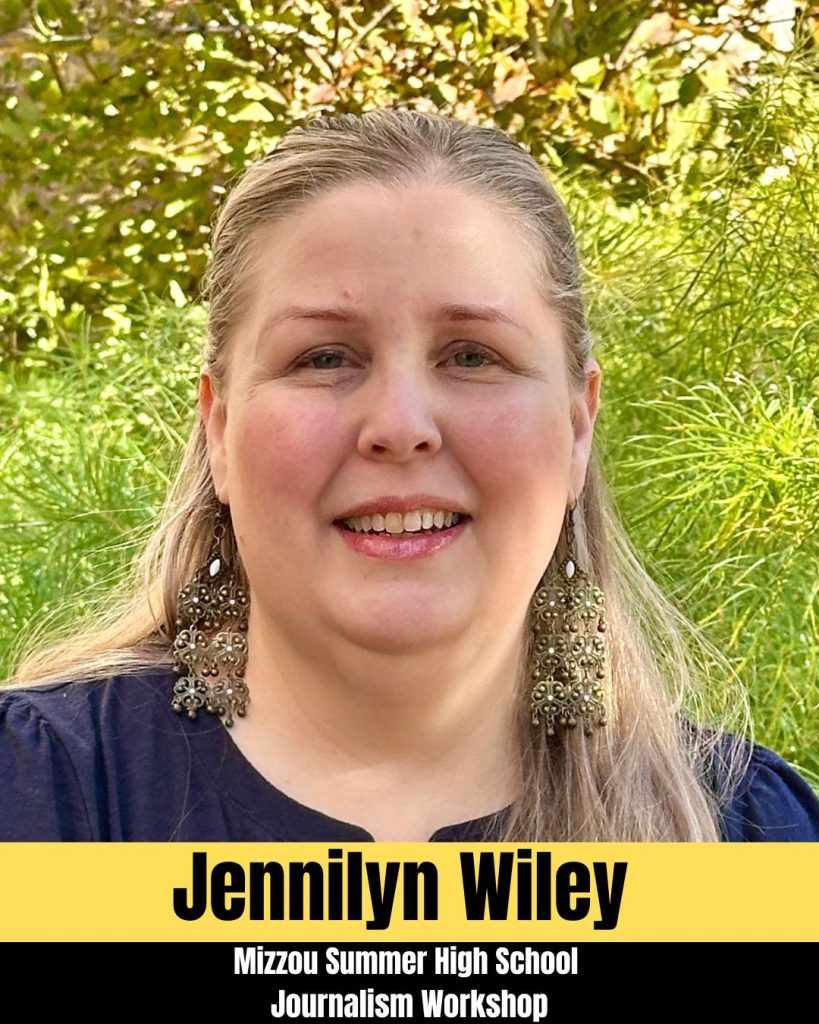
Head Journalism Librarian, University of Missouri
What’s your background?
I grew up in Ohio…so it’s exciting to be back in the Midwest after being down south for a little bit, because I do think (that) … there are some different sensibilities in different places. I grew up in a middle-to-upper middle class family. When we’re talking about the American dream, that definitely impacts me because I am constantly comparing what I’m able to achieve to what my parents gave me growing up. Am I doing better? I’m highly educated. I have a bachelor’s, master’s, and PhD.
What is the American dream?
Because I come from a communications background, I think it’s a social construct … it’s what we collectively as society decide. And I think there’s really two different ways to look at it. One is the economic way. When people think, if I can just get to America, no matter what challenges I’ve had, I can be a huge success … for those of us born here, I can do better than my parents. So I think there’s that side of it. And then I think there’s also the ideal, right? What do we see America as? I think of the preamble to the Constitution: “in order to form a more perfect union.” We should be looking at it collectively, together. We are all in this together. I think of the Statue of Liberty that talks about, give me your tired, your poor, your hungry, yearning to be free.
What is your American dream?
A lot of the directions that I see America going in are not necessarily the direction I would love for [us] to go in. So I struggle a lot with the idea of … being patriotic and what that [means]. Can you be patriotic and still believe that your country can do better? I still have faith that we can get to where we need to be from an economic standpoint. This has become really difficult as we’ve moved into a bifurcated economy where the people who are doing well are doing really well, and the people who are not are doing even (worse). I do often wonder, what is the reward at the end of all the work that everybody’s doing. What can I dream about that I can actually afford? Because houses are more expensive, cars are more expensive, education is more expensive, healthcare is more expensive, everything is starting to feel out of range for a lot of people. My hope, my personal hope is that at the end, when it’s time to retire, there will be something there. I’ll be able to travel, I’ll be able to do something. So I think it’s just that you’re putting in all that work and there is some kind of payoff.
Do you think your dreams are achievable?
I mean, when it comes to retirement, I honestly don’t know that I believe I can make enough money for retirement. I just don’t know that I believe it’s possible at this point with the way things are going, but by the same token, I haven’t given up. I’m not being stupid with my money. I just don’t know if it will be enough. So that is something I think about deeply. I think as you get older and you watch people go through retirement, you watch them age, you watch them die, you start to think more about how much money do I need in order to live the life I’d like to live at the end? I don’t know. But I haven’t completely given up hope.
What’s the biggest benefit in living in modern America?
As a woman, if I had been born in a lot of places on this planet, I think my life would have been very different. So I don’t actually play the lottery because I feel like I won the lottery at birth. Being born as a woman to a middle to upper middle-class family in the US. You know, my life could have been very different.
Jenny Jones Woodruff
Incoming President of Woodruff, a marketing and advertising agency, and a proud mother
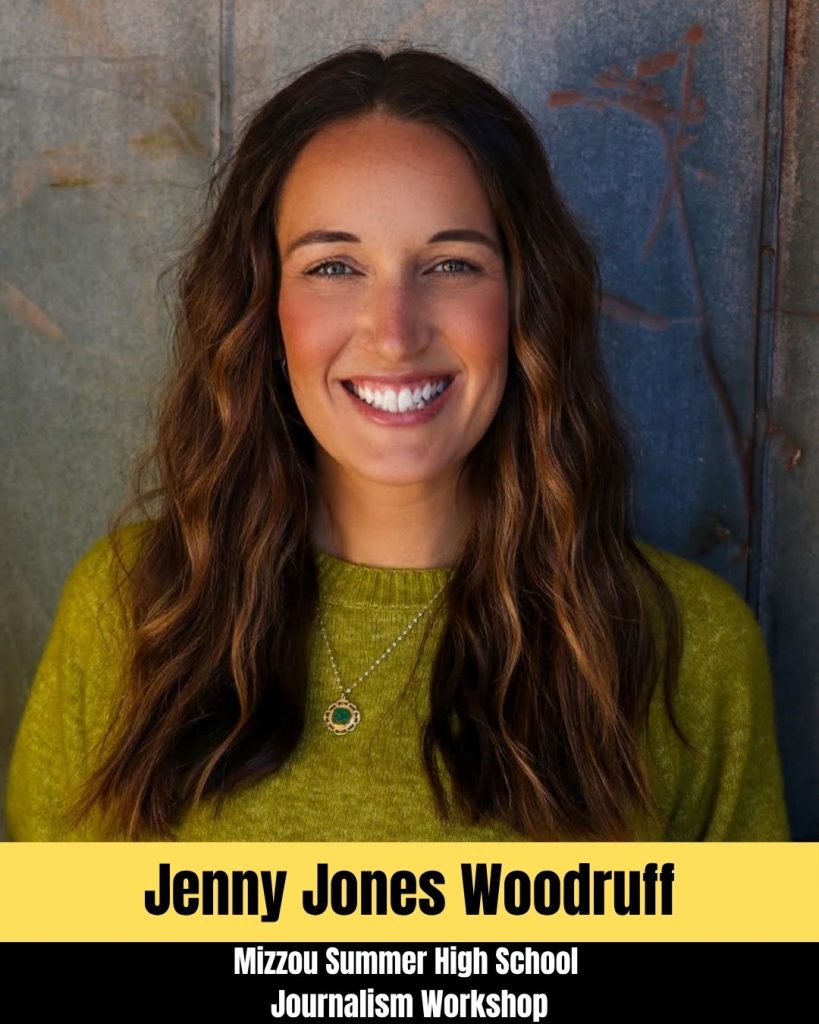
What three words would you use to describe yourself?
Leader. Mother. Advocate.
What is the American dream?
The American Dream is the idea that people can have goals or ambitions they strive to achieve and that may feel beyond their reach, but they are able to achieve them through access to resources, hard work, support from people in their corner and other opportunities regardless of who they are or their background. People should have the opportunity to achieve whatever their version of success looks like.
What is your American dream?
I would say that my dream is to be able to achieve financial success, achieve career success, and achieve family success, and have all of those things be able to work in tandem, be able to work together and … have the full approach to life.
What’s the biggest way you think America has changed?
I feel there’s more openness to achievements and success, depending on who you are. I’m a huge advocate for just youth in general and supporting youth through their career advancements, but also women in business. I’m a part of the Columbia Chamber Chamber of Commerce Women’s Network, that’s about promoting women and supporting women and being an advocate for women in that space. So, I just think one of the biggest things that has changed, over the years, is advocating for individuals to be able to have equality and success, and a shared definition of what that looks like, and being able to ensure that everybody has an equal opportunity of being able to achieve what they’re hoping to achieve.
Do you think your dreams are achievable?
From my perspective, achieving my dreams has not been a solo thing that I’ve been able to do alone, there’s a lot of my success that I attribute to mentors or advocates or family members or friends that have encouraged me or pushed me or promoted me or supported me or even given me opportunities along the way. So, do I think my dreams are achievable? Yes, I think that’s also because I’ve had a lot of people in my corner and a lot of people who have helped me get there.
How do you feel social media impacts your dreams?
I feel like I look at social channels differently. Facebook, in some regard, I feel is more family oriented for me, so whenever I think of that component of my dreams, social in that sense has given me community that, like, wants to see my kids and wants to see other photos or things that I share. LinkedIn, also a social network, is more business oriented, so for me, that’s the social channel that influences more of my of my career choices and what other leaders are doing or what what’s happening in our industry or our clients industry, so I think that social has had an impact on my dreams, but it’s more about just being able to share and create community and be able to build advisors or mentors or people that are in my corner through those social channels, not necessarily the negative side of social, that can be about, you know, comparisons or what others are achieving … I try not to let social influence me that way. I try to let it influence me in a better way of, like, creating community and building a LinkedIn network of people who are also growing their careers and at different stages in their lives.
Tech. Sgt. Meghan Yankowskas

United States Air Force Band, Expecting Mother
If you had to pick three words to describe yourself, what would they be?
I’d say empathetic, creative, and fun.
How would you describe the American dream?
I think it is just for people to live their most authentic self and I think a lot of that too is… just feeling that I’m able to be comfortable in the skin that I’m in … able to chase the things that excite me … and (letting others) enrich you as you go along your own journey.
What would you say your American dream is?
I think it’s just having the ability to chase the things that excite me. For me that’s a lot of creative endeavors, like music. It’s also events like this (Operation Shower, an organization that arranges baby showers for mothers affiliated with the military) where it’s very community driven, and just trying to figure out “how can I lift up others around me?”
How do you think social media in particular has impacted your dreams and the way you live your life?
I know (with me) there are a lot of musicians … where I’ll follow their page or message them, and that’s actually led to some collaboration opportunities too … A lot of it always comes back to community. I think that’s just creating a lot of new connections you wouldn’t have found otherwise with people with similar interests, ideals, ethics, and rules.
Have you been able to use social media to connect with moms who are in a similar situation to you?
At least on Facebook for my base, Scott Air Force Base, there’s a 2026 moms group … (I) get to know a lot of other resources that have helped them, that hopefully will help me, especially once I give birth to my son.
What advice would you have for the youth of today in achieving the American dream?
I would say seek connection … I don’t think there’s anybody that does it alone, even if it’s just like someone helped you pay your parking meter when they saw you were super frazzled and out of change or something like that … I think that’s just a really important thing.
Hon. Rebeca Navarro-McKelvey
Missouri Court of Appeals, Mother of Three
If you had to pick three words to describe yourself, what would they be?
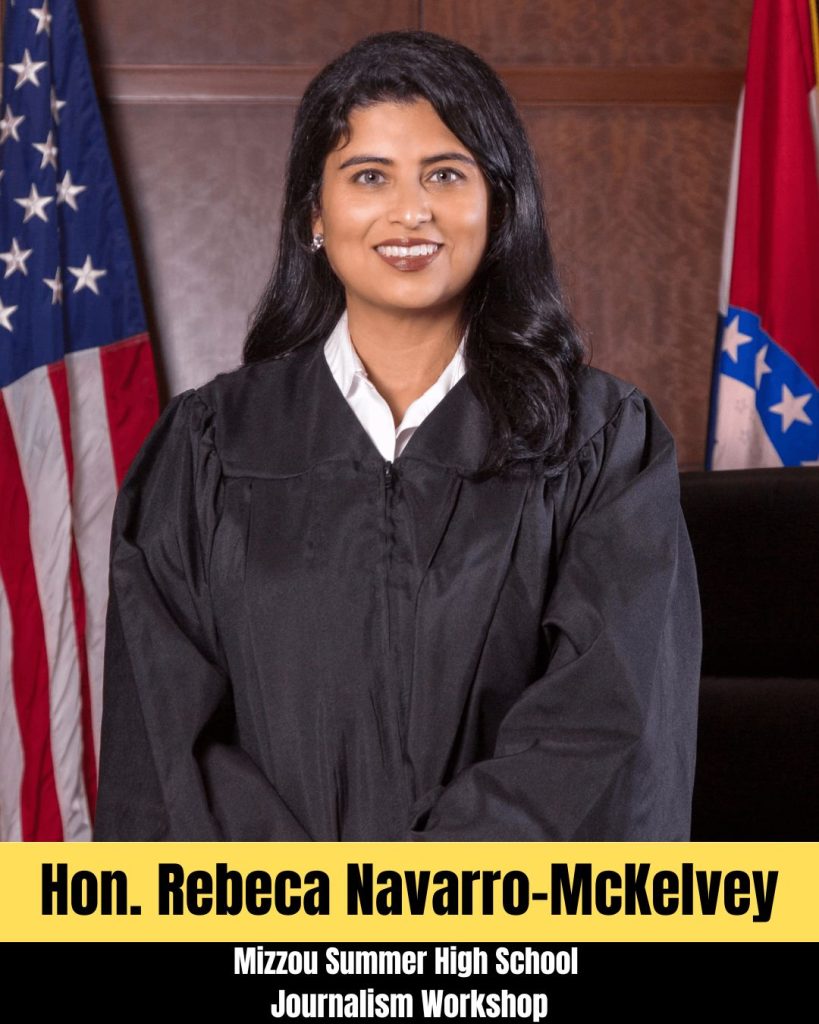
Blessed, hardworking, resourceful.
How would you describe the American dream?
I think the American dream is the opportunity for a level playing field that is based on your own efforts, no matter your socioeconomic background. You can do more than maybe your family did, maybe than (what) you’ve done in the past just based on taking advantage and making your own opportunities.
What would you say your American dream is?
I immigrated here from Nicaragua in the 1980s … my family and I did as a child. My parents were professionals in Nicaragua, but they came here to work. My mom was a lawyer, my dad was an architect, and they unfortunately had to start over again and work in restaurants and whatnot. But (in) one generation they were able to become business owners and homeowners and give me the opportunity for a great education. I was able to become a lawyer and eventually a judge in this country. So for me, again, it means opportunity out of your own efforts.
How do you think your dreams have changed as you’ve gotten older?
I guess as I got older, my concern is more having or creating an environment where my children can achieve their dreams.
Do you think that you have achieved this dream, or that it is an achievable goal?
I think that my husband and I were able to do everything within our limits to give our children opportunities, and it was up to them to take them. Luckily all three of them are people that have really worked hard to develop themselves. So, yeah, I do. I think that we’ve been able to achieve that.
What advice would you have for the youth of today in achieving the American dream?
It’s okay not to know what your dream is yet. And success is not a linear path. It’s not like step one, step two, step three, and you’ve got to be at this position by this age. Sometimes success can take a very varied and winding path. So I would say be flexible. Be flexible and give yourself grace.